
Best Tools for Conference Email Follow-Up: 5 Options Compared
The best tools for conference email follow-up in 2026 are Conference Hero, Instantly, Lemlist, Apollo.io, and Woodpecker. Each handles post-conference email sequence automation differently, and the right pick depends on whether you need a conference-specific workflow or a general-purpose outreach platform.
Here's the problem most teams face: you collect 150+ leads at a three-day conference, fly home exhausted, and those contacts sit untouched for a week. By then, your prospect has forgotten your booth conversation entirely. Research from InsideSales.com shows that response rates drop by 10x if you wait longer than 5 minutes to follow up on a warm lead. After 48 hours, you're essentially cold emailing.
We've seen this pattern dozens of times with the teams using our platform. The difference between a 22% reply rate and a 3% reply rate often comes down to one thing: did you have your follow-up sequence ready before the conference started?
Conference Follow-Up Email Tool Comparison Table
Tool | Built for Conferences? | AI Personalization | Lead Import from Badge Scans | Sequence Automation | Starting Price |
|---|---|---|---|---|---|
Yes | Yes (context-aware) | Yes | Yes | $34/mo (5 users, lead tracking and ind. emails) | |
No | Yes | No | Yes | $47/mo for 1,000 prospects | |
No | Yes | No | Yes | Starting $63/user/mo | |
No | Yes | No | Yes | Starting $59/user/mo (Limited Free tier available) | |
No | Limited | No | Yes | Starting $35/mo for 500 prospects (Not incl. add-ins) |
1. Conference Hero: Purpose-Built Conference Follow-Up
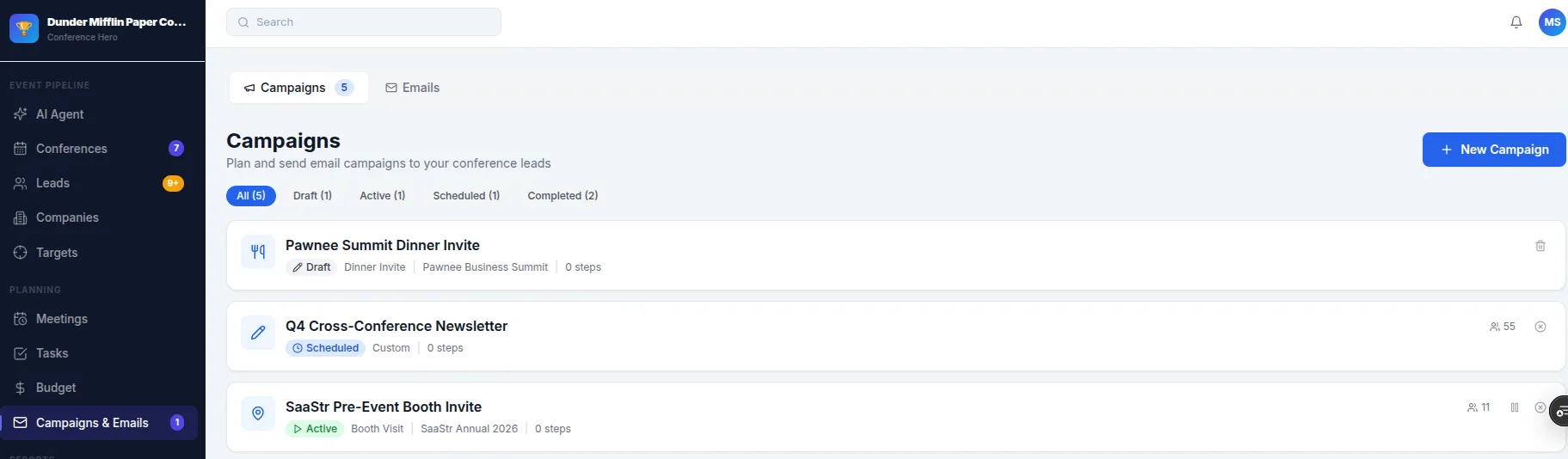
Conference Hero is the only platform on this list designed specifically for conference lead generation and follow-up. Instead of adapting a general sales tool to your event workflow, you get a system that already understands the conference context.
The built-in email campaign functionality lets you build post-conference email sequences before you even arrive at the event. You import attendee lists, tag contacts by conversation notes or booth interaction, and trigger personalized sequences the moment the conference ends.
Pros: Conference-specific workflows, AI-generated emails with event context, attendee list integration and a generous 90-Day Free Trial to get started.
Cons: Newer platform, smaller integration ecosystem than established CRMs.
2. Instantly: High-Volume Cold Outreach
Instantly excels at scaling email outreach across multiple sending accounts. If you're working a massive conference like CES or Web Summit and come home with 500+ leads, Instantly's infrastructure handles volume well.
Pros: Unlimited email accounts, strong deliverability tools, lead warmup built in.
Cons: No conference-specific features. You'll need to manually segment and personalize for event context. The platform assumes cold outreach, not warm follow-up.
3. Lemlist: Personalization at Scale
Lemlist stands out for its personalization capabilities, including dynamic images and custom landing pages in email sequences. For teams that want visually memorable follow-ups (think: a photo from the conference with the prospect's name overlaid), it's a strong option.
Pros: Dynamic image personalization, multichannel sequences (email + LinkedIn), good template library.
Cons: Pricier than alternatives, learning curve for advanced features, no native conference workflow.
4. Apollo.io: All-in-One Sales Intelligence
Apollo.io pairs a massive B2B contact database (275M+ contacts) with email sequencing. After a conference, you can enrich the leads you collected with firmographic data and slot them into automated sequences based on company size, industry, or role.
Pros: Huge contact database for enrichment, generous free tier, built-in CRM.
Cons: Email sending limits on lower tiers, data accuracy varies by region, no event-specific segmentation.
5. Woodpecker: Simple and Reliable
Woodpecker is the no-frills option. It does one thing well: send cold email sequences with solid deliverability. Teams that want a lightweight tool without feature bloat often land here.
Pros: Clean UI, strong deliverability monitoring, good for small teams.
Cons: Pricing and add-ins are not transparent and confusing and can be pricey. Limited AI features, no built-in lead database, requires manual list preparation after events.
Conference Follow-Up Email Best Practices
Regardless of which tool you choose, these principles separate high-performing post-conference sequences from the ones that get ignored:
Send your first email within 24 hours. Reference something specific: the session you both attended, the demo they saw, the problem they mentioned. Generic "great meeting you" emails get a 2-4% reply rate. Specific ones hit 15-25%.
Build a 3-touch sequence minimum. One email isn't enough. In our experience, the second and third emails in a post-conference sequence generate nearly as many replies as the first.
Segment by intent level. Not every badge scan is a hot lead. Separate "stopped by for swag" from "asked detailed pricing questions" and write different sequences for each.
Prep templates before the event. You won't have energy to write great emails after four days on a conference floor. Draft your sequences in advance and personalize with notes after.
If you need help drafting that first email quickly, try Conference Hero's free Follow-Up Email Generator. It creates personalized, context-aware follow-up emails in seconds.
Our Recommendation
For teams whose primary use case is post-conference follow-up, Conference Hero is the clear fit. It removes the friction of adapting a general outreach tool to an event workflow. The built-in campaigns feature handles the entire flow from attendee list to automated sequence.
If you already run large-scale cold outreach and need a conference follow-up bolted onto that, Apollo.io or Instantly are solid secondary options. Lemlist makes sense if visual personalization is central to your brand.
Frequently Asked Questions
How soon should I send a follow-up email after a conference?
Send your first follow-up email within 24 hours of meeting someone at a conference. Response rates drop dramatically after 48 hours. The best-performing teams we've worked with pre-build their email sequences and trigger them the evening of the last conference day.
How many emails should be in a post-conference follow-up sequence?
A minimum of 3 emails spaced over 7-10 days works well for most B2B conference follow-ups. The first email should reference the event directly. The second adds value (a relevant resource or case study). The third creates urgency or offers a specific next step like a 15-minute call.
What's the difference between a conference follow-up tool and a regular cold email tool?
Conference-specific tools like Conference Hero include features designed around event workflows: attendee list imports, conversation-note tagging, and AI that understands event context for personalization. General cold email tools like Instantly or Woodpecker require manual adaptation for conference use cases.
Can I use a free tool for conference email follow-up?
Yes. Both Conference Hero and Apollo.io offer free options that support basic email sequencing. Conference Hero's generous 90-Day Free Trial for the Teams plan offers unlimited email campaigns and sequencing.
What reply rate should I expect from post-conference emails?
Well-segmented, personalized post-conference emails typically achieve 15-25% reply rates, compared to 2-5% for generic cold outreach. The key factors are speed (sending within 24 hours), specificity (referencing the actual conversation), and relevance (matching the follow-up to the prospect's stated interest).
Ready to maximize your conference ROI?
Join thousands of B2B revenue teams using Conference Hero to capture more leads, manage tasks, and prove event ROI.
Get Started Free