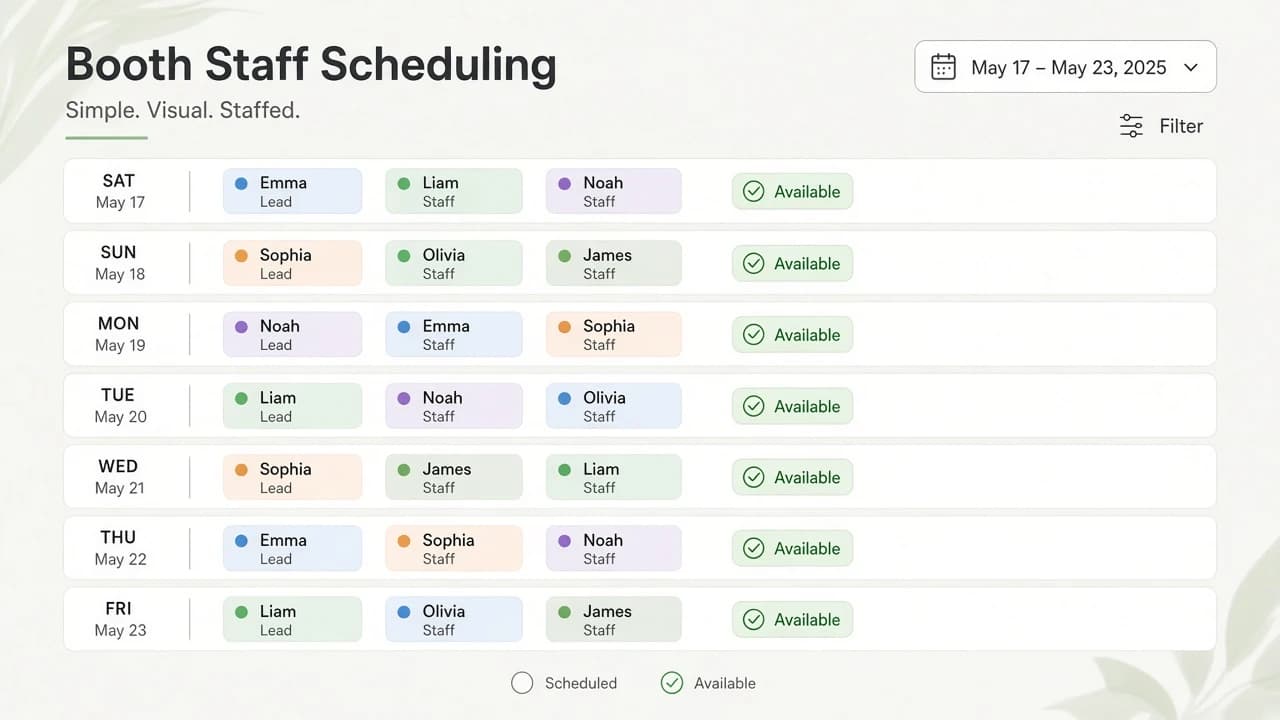
Conference Booth Training and Staff Scheduling
Great booths fail for boring reasons: nobody owns the lunch rush, new reps freeze on the first tough question, and hot leads wait while two people chat with a tire-kicker. This guide covers conference booth training and booth staff scheduling as one system so sales leaders and field marketers can staff the floor with coverage, clarity, and a shared playbook.
It stays upstream of live qualification scripts. For word-for-word prompts once someone is engaged, use our booth qualification scripts for conference leads. Here the focus is who is on when, what they practiced before wheels up, and how shifts protect energy for the accounts that matter.
Why scheduling and training belong together
A beautiful shift grid with untrained staff still burns leads. A trained team with chaotic coverage still misses buying-committee walk-ups during breaks. Treat booth staff scheduling and conference booth training as one pre-show workstream owned by the same lead.
Outcomes to aim for:
Every open hour has a primary greeter, a closer, and a float who can relieve either role.
Every person on the roster can run the open, qualify, and handoff in under three minutes.
VIP accounts get named owners on specific blocks, not a hope that the right AE wanders by.
Build the booth schedule before the training agenda
Start with constraints, not preferences. Pull show hours, setup and teardown, hospitality events, and known account meetings. Then draft shifts in 2 to 3 hour blocks. Longer blocks sound efficient and produce glazed greeters by mid-afternoon.
Roles to put on the grid
Greeter. Opens conversations, routes traffic, protects the closer from drive-bys.
Closer / product owner. Runs deeper demos and books next steps.
Capture owner. Owns scanning, notes quality, and CRM hygiene for the shift.
Float. Covers breaks, VIP pulls, and surge traffic.
Small teams combine roles. Still name the combination on the schedule so nobody assumes "someone else" will scan.
Coverage rules that prevent dead zones
Never leave the booth with fewer than two people during peak aisle traffic.
Stagger breaks so greeter and closer never leave together.
Reserve named blocks for top accounts and speakers you must catch.
Put your strongest openers on the first 90 minutes of each day when energy and traffic are highest.
Plan a 15 minute shift huddle at every handoff: hot leads, issues, and who owns follow-up tonight.
Publish the grid in one shared place the week before the show. Paper taped to the booth back wall still helps when Wi-Fi dies.
Conference booth training that sticks in one week
You do not need a two-day academy. You need reps who can open, qualify, capture, and hand off without inventing the process on the carpet.
Day 1 to 2: Context and offers
Brief the room on why you are at the show, the three offers you will lead with, and which accounts are must-meet. Share competitive landmines and the single metric that defines a good lead for this event.
Day 3: Live drills
Run timed role plays: greeter open, two qualifying questions, scan plus note, and a clean handoff to the closer. Rotate so every person plays greeter and closer. Record one round on a phone and review where people stall.
Day 4: Tools and capture standards
Practice the actual scanner or form you will use. Agree on required fields and tags. Bad notes are a scheduling problem in disguise because SDRs waste the next week decoding them. Align capture standards with how you plan to score leads after the show.
Day 5: Floor logistics
Walk the schedule, break rules, VIP blocks, and escalation path when a senior buyer shows up during a thin shift. Confirm who owns nightly follow-up and where drafts live.
Sample two-day booth schedule
Adjust to your show hours. The pattern matters more than the clock times.
Open to mid-morning: strongest greeter + product closer + capture owner. Float covers early VIP pulls.
Mid-morning to lunch: rotate greeter; keep closer fresh for demos; float takes first break window.
Lunch surge: full staffing, no optional meetings off-booth.
Afternoon: shorter blocks, float absorbs fatigue; greeter with high energy owns the aisle.
Last 90 minutes: closer-heavy for serious buyers who shop late; capture owner double-checks notes before teardown mindset kicks in.
For larger teams, split morning and afternoon A-teams instead of burning the same three people for nine hours.
Training topics that reduce awkward floor time
Keep the curriculum short and specific:
Open lines that invite a real conversation instead of "Can I help you?"
Disqualify politely so the booth stays available for fit.
When to pull a specialist versus handling it yourself.
How to book a next step before the badge walk-away.
What never to say about pricing, roadmap, or competitors.
Pair this guide with qualification scripts when you want exact language. Scheduling gets people in place. Training makes those minutes count.
Planning tools that keep the team honest
Use a shared checklist so prep tasks do not live in one person's head. The free conference prep checklist and the rest of the Conference Hero tools help you sequence staffing, budget, and follow-up before you travel. If your team already uses task planning inside Conference Hero, the AI task planner is a useful place to turn this schedule and training plan into assigned work.
For a wider prep view, the ultimate conference preparation checklist covers revenue-team readiness beyond the booth roster.
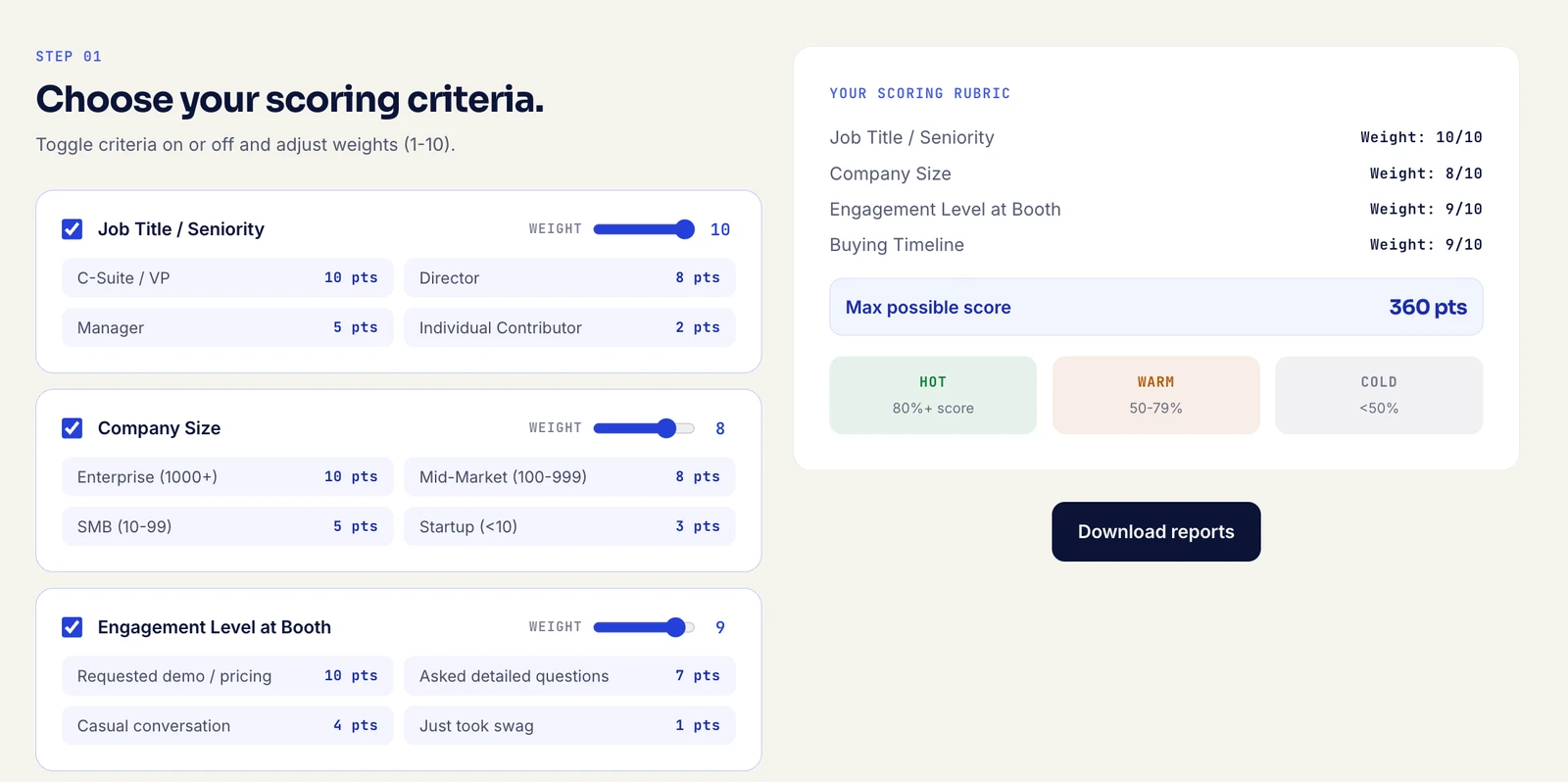
Day-of huddles and night-of recovery
Morning: five minutes on targets for the day and any schedule changes. Shift handoff: hot accounts, broken gear, and who is dragging. Evening: twenty minutes to clean notes, assign follow-up owners, and adjust tomorrow's grid based on real traffic.
Protect sleep. A heroic double shift on day one usually costs you day two when the best meetings appear.
Next steps
Draft the role grid, book one week of short training blocks, and run two live drills before anyone packs. Publish the booth staff schedule where the whole traveling team can see it, then treat conference booth training as mandatory for every shift owner, not only new hires. When the floor gets loud, the teams that rehearsed coverage and handoffs are the ones still capturing clean pipeline.